AI for Flood Resilience in Rio de Janeiro: Innovating Early Warning Systems in Acari and Jardim Maravilha
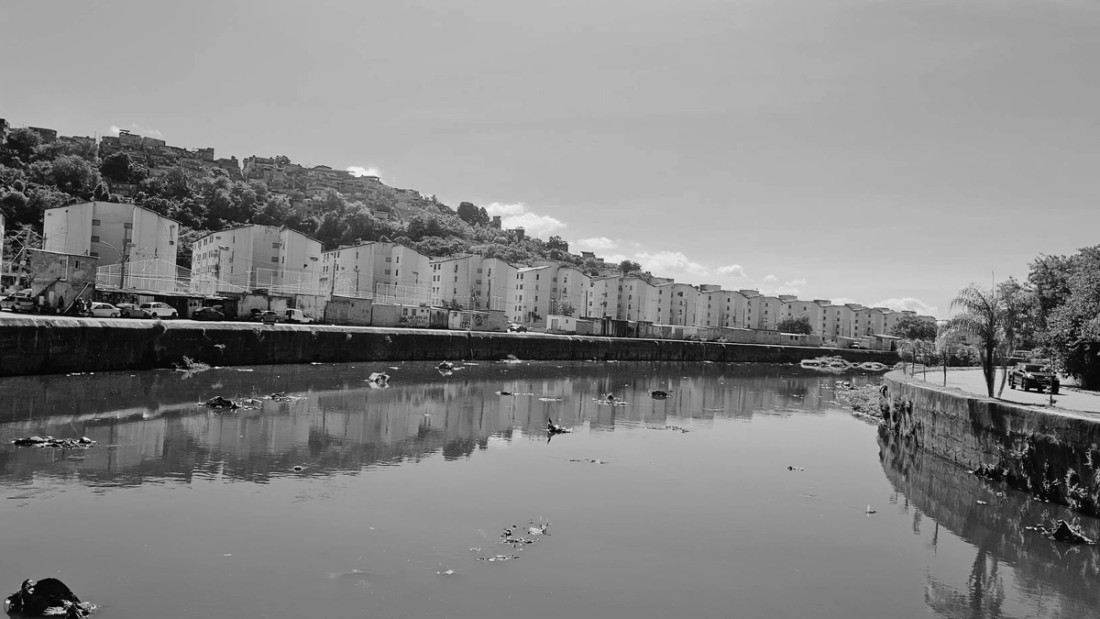
The neighborhoods of Acari (North Zone) and Jardim Maravilha (West Zone) in Rio de Janeiro are home to more than 50,000 residents who face recurrent and increasingly severe flooding due to climate change.
Situated in low-lying floodplains near the Acari, Guandu, and Piraquê-Cabuçu rivers, these communities experience frequent inundation during extreme rainfall events, leading to infrastructure damage, economic losses, and heightened public health risks. The approximately 53,000 residents of Acari and Jardim Maravilha are among Rio’s most economically vulnerable communities.
To address these challenges, Columbia Global Center Rio de Janeiro, in partnership with the City of Rio, is leading a 24-month initiative (Jan. 2025 - Dec. 2026) to strengthen flood preparedness, response, and recovery through the use of artificial intelligence (AI) and community-centered communication systems.
Project Objectives
The project aims to:
- Strengthen the city’s flood early warning and response systems through technical assistance
- Develop a dedicated AI-powered WhatsApp chatbot to enable real-time, two-way communication between residents and city authorities
- Improve the accuracy and speed of the Rio Operations Center’s flood monitoring and decision-making systems
- Train and engage community leaders as "champions" of the early warning system to ensure trust, accessibility, and sustained use
- Generate a scalable model for flood resilience that can be adapted to other cities in Brazil and beyond
By integrating machine learning, natural language processing, and real-time data analysis, the early warning system will allow residents to report flooding conditions through text and images sent via WhatsApp. Verified information will feed into the city’s emergency management protocols, enabling faster alerts, more targeted responses, and improved coordination across agencies.
The project also strengthens the capacity of the City of Rio’s emergency management institutions — Rio Operations and Resilience Center (COR), the City Data Office, and the Municipal Secretariat of Health — and contributes to global learning on urban climate resilience and AI-enabled disaster response.
Columbia Faculty Engagement and Advisory Board
A cornerstone of the project is the active engagement of Columbia University faculty through a dedicated advisory committee. The committee brings together experts in climate science, disaster risk management, geospatial analysis, and AI to provide ongoing technical guidance and oversight.
- Andrew J. Kruczkiewicz – Columbia University
Faculty Lecturer at the Columbia Climate School and expert in extreme weather and early warning systems, Andrew works on impact-based forecasting and climate risk integration into policy. - Candace Agonafir – Columbia University
Associate Research Scientist in the Department of Statistics and at Learning the Earth with AI and Physics (LEAP), Candace develops AI tools for climate adaptation, with a focus on water systems and urban flooding. - OreOluwa Badaki – Columbia University
Post-doctoral Fellow at Teachers College, OreOluwa works at the intersection of environmental justice, critical literacy, and community engagement, including art-based climate initiatives in Brazil. - Paige Arthur – Columbia University
Director of Global Programming at Columbia Global, Paige focuses on global partnerships and in the past, has explored the role of AI in peacebuilding and equitable innovation. - Pierre Gentine – Columbia University
Professor of Geophysics and Director of Learning the Earth with AI and Physics (LEAP), Pierre integrates physics and machine learning to advance climate science and flood risk modeling.
Local Stakeholders Advisory Board
The project also benefits from Brazil-based advisors who offer local perspectives and regional expertise.
- Polinho Motta – data_labe
Data coordinator at data_labe, Paulinho is a PhD candidate in Epidemiology and Population Data Science at UFRJ. He works for the democratization of technology, focusing on digital justice and popular sovereignty. - Mariana de Paula – Instituto Decodifica
Co-founder and Executive Director of Instituto Decodifica, Mariana is a production engineer with specializations in management and knowledge intelligence. She researches environmental racism and climate crisis impacts in marginalized territories, co-founded the coalition O Clima é de Mudança, and is a fellow of the BMW Foundation and the Columbia Women’s Leadership Network. - Daniel Mancebo – City of Rio de Janeiro
General Coordinator of the Planning Office of the City of Rio de Janeiro, Daniel is a geographer with 20 years of public service. He leads interdepartmental coordination and long-term urban planning strategies. - Cinthia Avellar – Rio’s State Institute of the Environment (INEA)
Hydrometeorology Manager at INEA, Cinthia is a meteorologist with a master’s degree from USP and a background in Architecture. She oversees climate and hydrological monitoring in the state of Rio de Janeiro and has broad experience in risk management and environmental policy. - Leticia Pinheiro – Fala Akari Collective
Social worker and master’s student at UERJ, Leticia is a grassroots educator from Acari. She is part of the leadership of the Fala Akari collective and has experience working with the DEGASE juvenile system and in community-based college prep programs in Rio’s North Zone.