Sundays at Praça Paris: Food, Memory and the African Diaspora in Rio de Janeiro
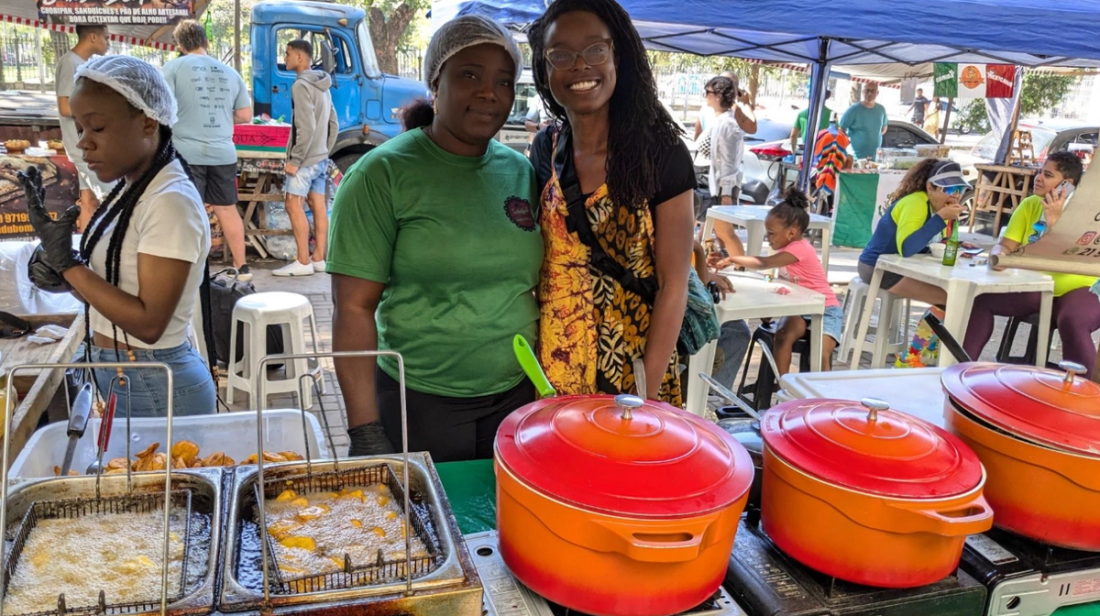
Teachers College’s OreOluwa Badaki follows a song, a street food and a city square in Rio de Janeiro to ask how people of the diaspora stay rooted without standing still.
Rooted in rhythm
There’s a song by Luedji Luna called “Asas.” It is soft and undulating and feels like a warm sonic bath. I think about it often when I remember my first trip to Brazil.
I first heard it from a friend’s speaker in Praça Paris (Paris Square) in the heart of Glória, the neighborhood where I was staying in Rio de Janeiro. I can’t be sure, but I think it was on a Sunday. I say this because behind Luedji’s voice I remember a blend of sights, sounds, and smells from Feira Livre da Glória (Gloria Market); one of Rio's largest open air markets held every Sunday.
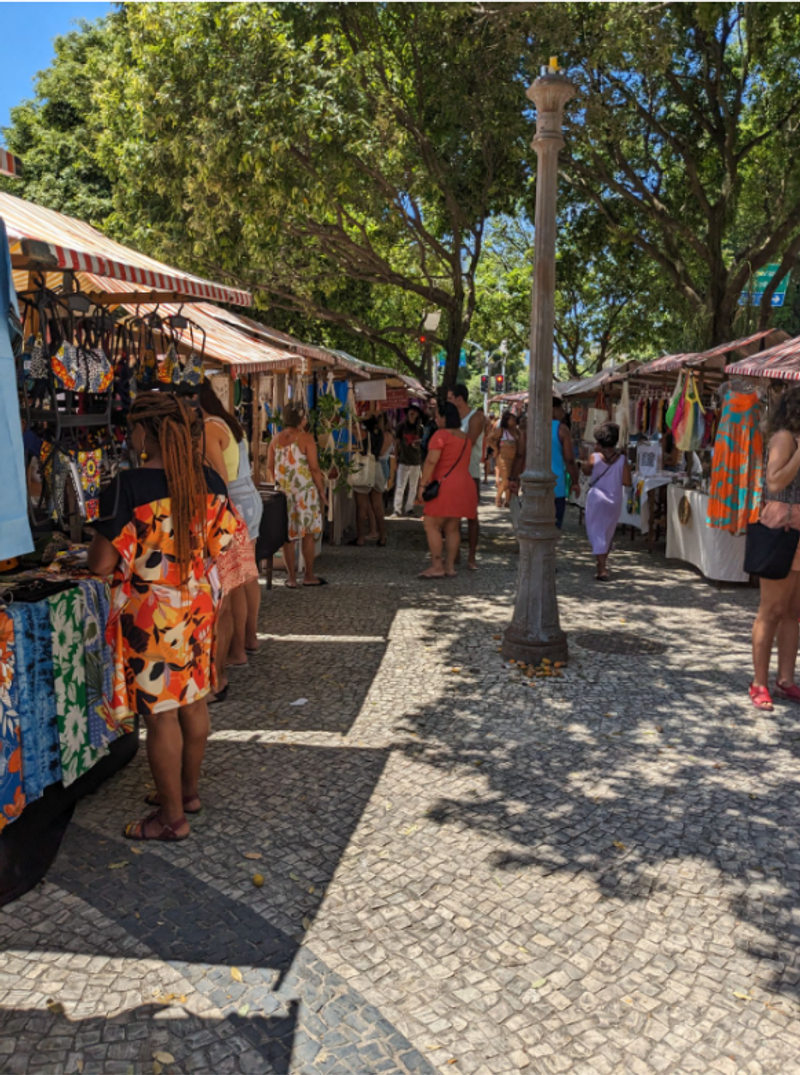
With the Feira as my backdrop, I listened as Luedji sang, "Vento que me leva onde quero ir, e onde não quero." (Wind come take me where I want to go, and where I don’t.) Brazil has been a place I have wanted to go for a long time. As both a member and researcher of the African Diaspora, I’ve long heard about the important role Afro-descendants in Brazil have played in preserving and reimaging our stories across the globe. There are signs of this all over Praça Paris on Sundays. Cultural groups practicing capoeira angola, jongo, samba, carimbó, and more are sprinkled all around the square. At the Feira, there’s no shortage of fabrics, artisan craftsmanship, and artwork pointing back to the African roots of modern day Brazil. Oh, and the food; we can’t forget about the food.
Rooted in recipes
Part of my reason for coming to Brazil in the first place was to learn more about African diasporic food and agricultural practices. One aspect of my work in environmental education and climate communication focuses on the cultural and creative stories we tell around food. I’m grateful to have received support from the Columbia Global Center Rio to further this work and connect it to other climate initiatives.
At the Feira, I was like a kid in a candy store, there were delicacies from across the African diaspora. One of the foods with a uniquely Afro-brazilian touch is acarajé. Closely connected to the Baianas of Salvador and recognized by UNESCO as part of Brazil’s Intangible Cultural Heritage, acarajé is one of Brazil’s most popular street foods. The name comes from “acara,” which is a fried black-bean fritter popularized by the Yoruba people of Nigeria, and “je,” which means “eat” in Yoruba. Traditional acarajé consists of a crispy and fluffy acara fritter fried in dendê (palm oil) that is then cut in the middle and stuffed with vatapá (a creamy and savory paste), caruru (sauteed okra and tomatoes), and dried or fresh shrimp. My two cents: while you can find good acarajé on Sundays at the Gloria Market, my favorite acarajé in Rio so far is from a small food stand “Barraca Acarake Di Do,” also at Praça Paris, right across from the metro station.
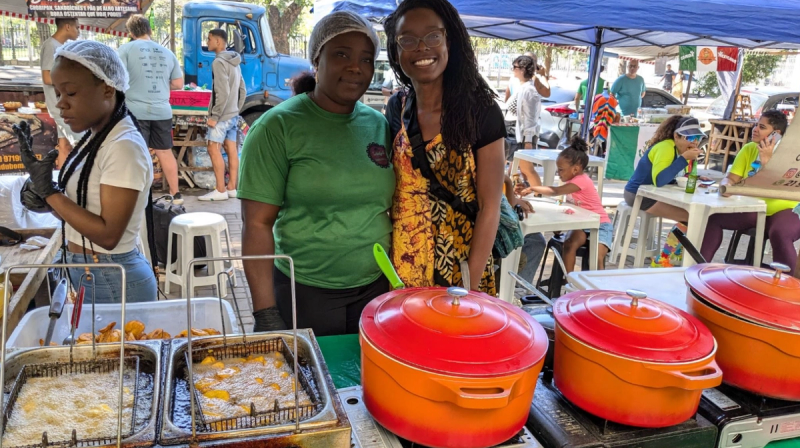
Acarajé is also a votive (offering) food for Iansã, or Oyá , one of the major deities in the Afro-Brazilian religion of Candomblé. Iansã is the deity of change, of wind, of storms, and also one of the inspirations behind Luedji’s song. The wind that takes you where you want to go, as well as where you don’t, is the wind of Iansã. While it would be comfortable to simply immerse myself in the vibrant celebrations of African culture at the Feira, I can’t fully understand these celebrations without understanding the tragedy, murder, theft, and displacement that made these celebrations necessary.
Rooted in place
The very space in which I was enjoying these festivities and listening to Luedji’s song is a testament to this complicated story. Designed in the 1920’s, Praça Paris was part of a “whitening” mission that characterized much of mainstream socio-political activity in Brazil, sometimes referred to as “branqueamento.” A rising fear among elites that Brazil’s more than 300 year practice of enslaving people from the African continent would result in a majority Black country, policy makers began voraciously implementing policies to import White Europeans, align itself with European colonial powers, and displacing Black communities. As the capital of Brazil at the time, Rio led the charge. French urban planner Alfred Agache was commissioned to design Praça Paris as a tribute to the “Paris of the tropics.” It was built atop the ruins of Morro do Castelo (Castle Hill), the birthplace of Rio’s first city plan and at the time home to a large concentration of Afro-descendent and poor communities. These communities were subsequently displaced to make room for Praça Paris, and it's likely that the sorts of community and cultural practices that are central to Sundays at Praça Paris today would have been criminalized at the time of its inauguration.
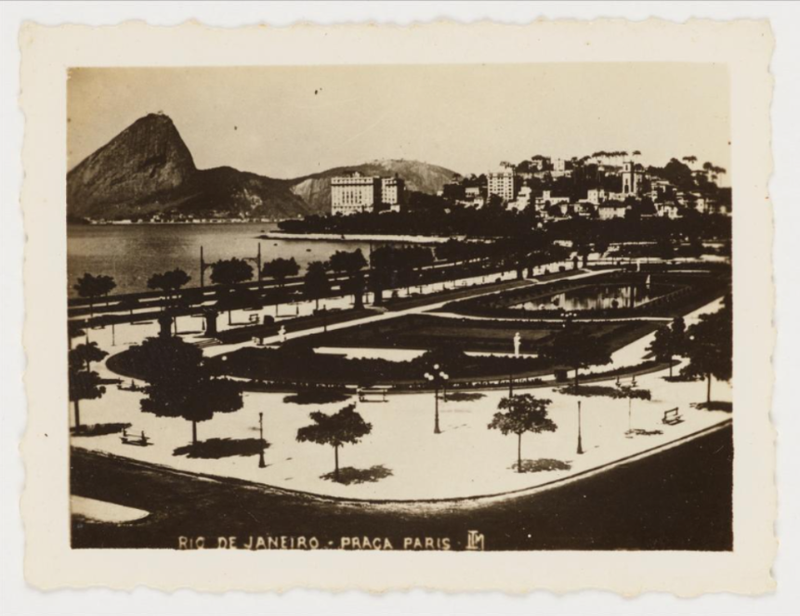
It’s notable that one of the justifications for the raising of Morro do Castelo in the 20’s was that it created a bottleneck that blocked windflow from the sea to the low-lying marshy center of the city. City health officials had argued for years that this contributed to fever, plague, and cholera outbreaks in the city, and there was truth to this. Wind circulation is crucial for the health and well being of our societies and our bodies, we cannot change or grow in stagnate air.
The question of diaspora
Luedji sings, "Vento vem me mostrar qual a força que tenho para seguir (Wind come show me the strength that I have to keep going.” To me, the song is about the natural forces of change, about both recognizing our own power and agency within these forces, as well as relinquishing the parts of these forces we can’t control. How do I root myself in these complex stories and histories without being stuck or stagnant? How can this help me adapt to, thrive in, and improve whatever environment I find myself in? These are the questions my time in Brazil so far has sharpened for me. These questions aren’t just important for me, or just for people who look like me. Any person (or living entity for that matter) who finds themselves in a place separate from where their people came into existence, has likely had to face these questions at some point in their lives. I’m grateful that my time in Brazil has opened me up to new perspectives, rhythms, and resonances that speak to these questions.
About the author
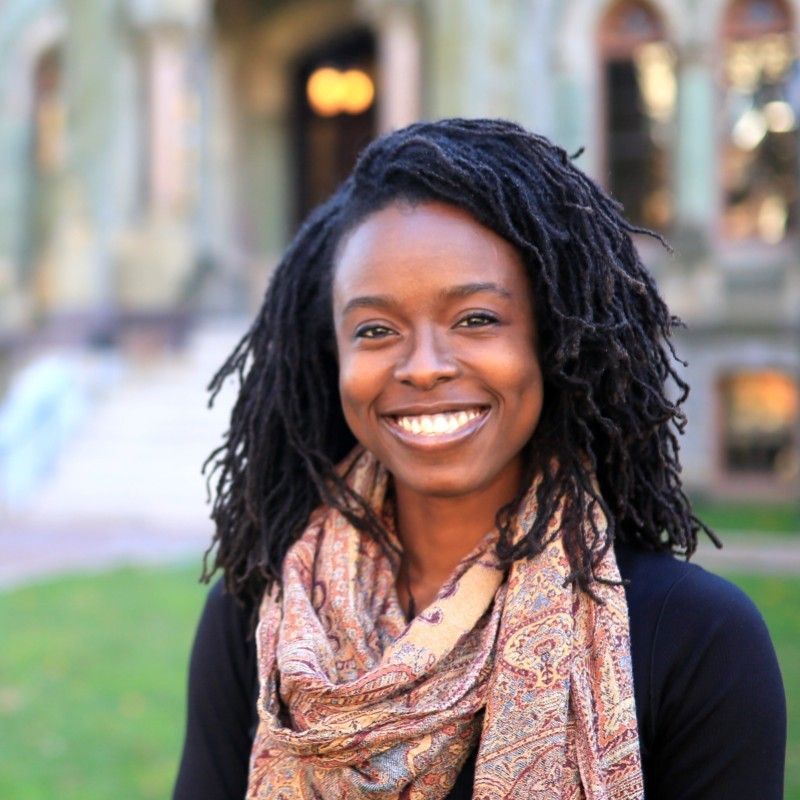
OreOluwa Badaki is a Research Fellow at Teachers College, Columbia University. Bridging critical literacy studies, multimodal scholarship and environmental justice, she examines how power moves through bodies and spaces within food and land systems. As a writer, movement practitioner and educator, she works with youth and communities to explore environmental justice through the creative and performing arts. In 2023, she received one of the inaugural Climate Hub Rio Grants from the Columbia Global Center in Rio de Janeiro for her project, Amplifying Climate Change Education and Communication in Brazil, which deepened her collaborations with Brazilian scholars, artists and educators. She now serves on the Advisory Board of the Rio Center’s AI for Flood Resilience program.
Still Curious?
Q&A: Climate Hub Grantee on Lessons Learned
OreOluwa looks back on her Climate Hub Rio project, from Afro-Brazilian foodways and women growers in Pará to her conversations with young climate negotiators in Rio.
AI for Flood Resilience in Rio de Janeiro
Learn how Columbia Global Center Rio and the City of Rio are using an AI-powered WhatsApp chatbot and community leaders to strengthen flood early warning in Acari and Jardim Maravilha. OreOluwa serves on the project’s advisory board.
