Beijing Global Center Expands as it Marks 17 Years
Linked for Life and Giving Back
Thousands of events. Hundreds of research projects. Countless students impacted.
“I was able to establish connections and collaborate with influential individuals and organizations in the country.”
“The Center helped sharpen my worldviewson a wide range of topics, from sustainability to entrepreneurship to being a global citizen.”
“It was a place I could call home, with more support than I could have asked for.”
For more than 17 years, Columbia Global Center Beijing has been a bridge between Columbia University in New York City and China. It has supported academic exchange, partnership development, research, and both professional and personal growth.
In appreciation, Columbia alumni support the Center’s programming and work, including donating its newly expanded offices.
“This beautiful new space for us is definitely far more than just an office. It is our affirmed, renewed commitment to Columbia’s global mission, and also our expanded ambition for what we can accomplish together,” said Beijing Center Interim Director Helena Xiao.
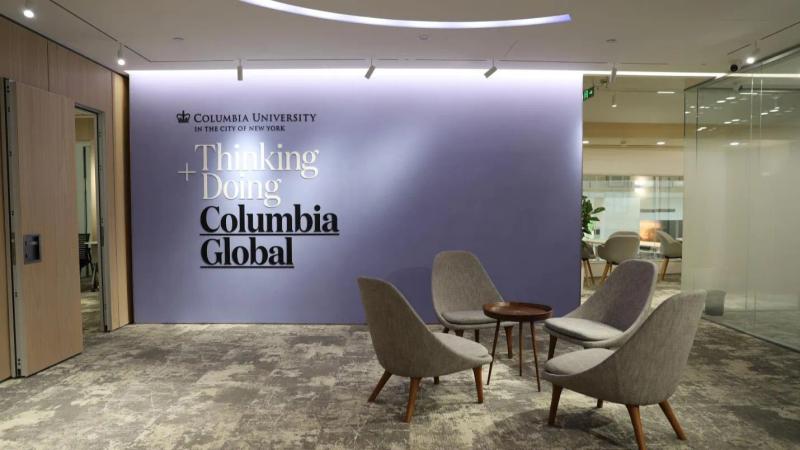
Opened in 2009, Beijing was Columbia’s first Global Center, created by former President Lee C. Bollinger with the vision of expanding Columbia’s global connections. Today, there are 11 Centers located around the world, each operating entirely through alumni and donor support to facilitate research, student engagement, and work against critical issues.
In Beijing, Columbia University alumni say their support of the Center stems from a mixture of appreciation, responsibility, pride, and hope.
“I think that together – the University, the Center, and this incredible alumni group – we can support a better future for Columbia and for the rest of the world,” said Jack Hsu (CBS ’98), CEO of Ivy Group International, Inc.
A long-time supporter of the Beijing Center and member of its Advisory Board, Hsu donated the new offices, saying he is indebted to Columbia alumni, many of whom supported his early success, and to the Beijing Center because it continues to grow the alumni network, strengthen the University, and foster positive impact in China and the world.
“We have over 6,000 current students at Columbia from China. This is a relationship that is inseparable among China, the U.S., and Columbia. You cannot tell a global story without talking about these two countries. We cannot give up on building the bridge between them, and Columbia has a unique role in helping strengthen that connection,” Hsu said.
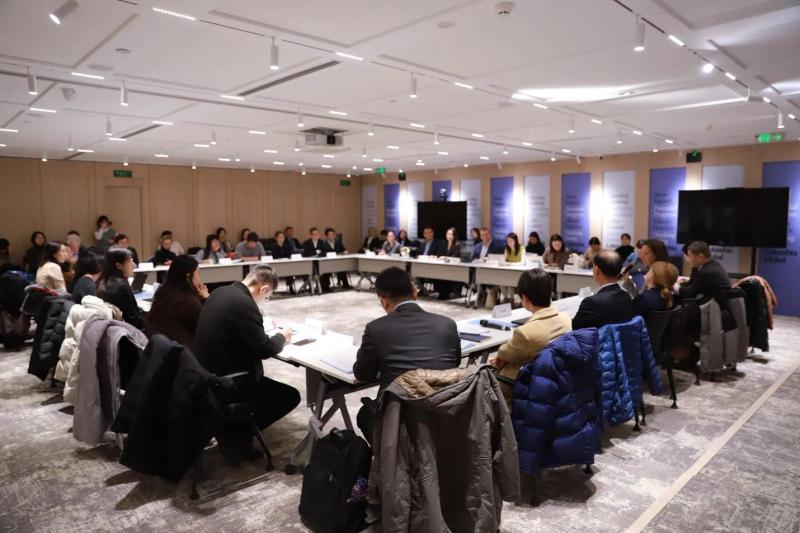
Since its opening, the Beijing Center has created thousands of programs and events, enriching faculty and students, addressing critical local and global issues, and giving Columbia alumni a point of connection to help each other, students, and community challenges. Some projects include:
- Creating the Richard Rockefeller Fellowship, aimed at reshaping sustainability in China by advancing the leadership of local climate leaders and the impact of climate action through training at Columbia and in New York City.
- Developing travel seminars for students to connect classroom leaning with real-world experienced in Beijing, including the Imperial Art History and Global Track on Public Health seminars.
- Enabling research with global impact, helping Columbia scholars translate research into direct engagement with local realities through programs such as Scholars-in-Residence, thematic workshops, lectures, and partnerships that foster dialogue with local communities and institutions.
- Supporting Columbia’s largest population of international students through their academic journey from application to travel, to graduation, and then job placement.
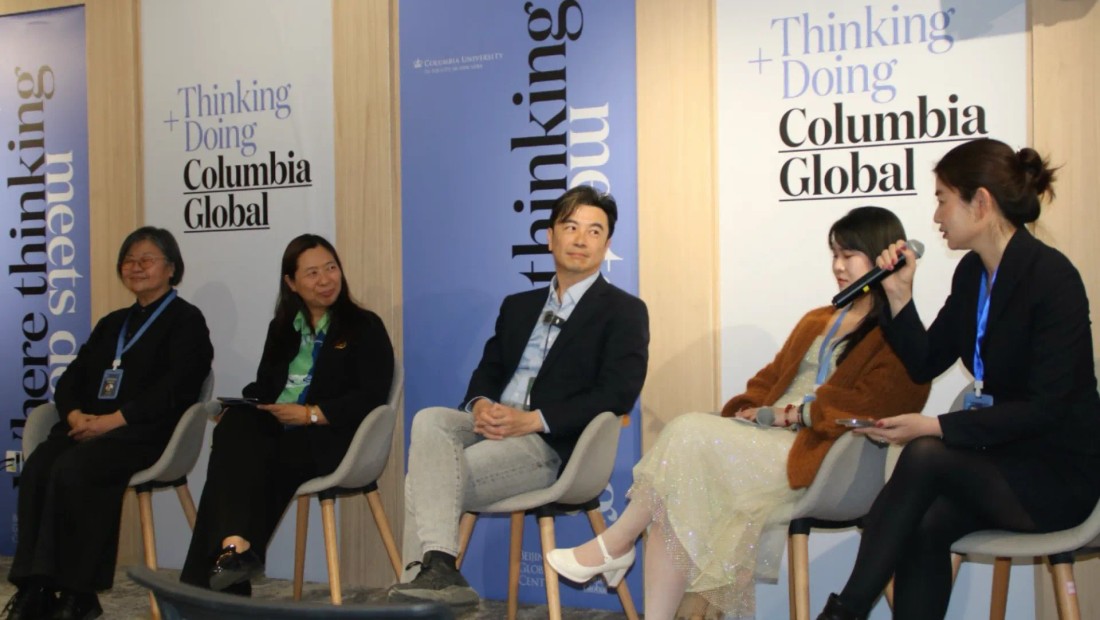
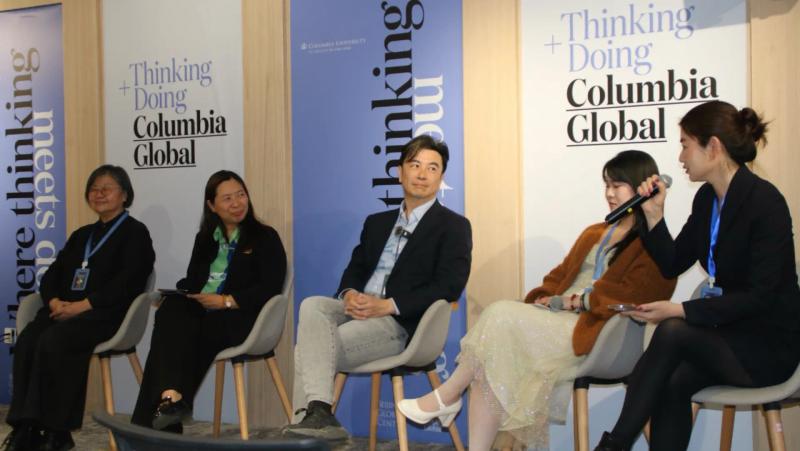
- Most recently, the Center held a packed-room panel discussion on AI: Beyond the Algorithm, with Wafaa El-Sadr, Executive Vice President of Columbia Global; Benjamin L. Liebman, Professor of Law and Vice Dean for Intellectual Life; Adam Tooze, Professor of History, Chair of the Committee on Global Thought, and the Director of the European Institute at Columbia University; and Tian Zheng, Professor of Statistics, Graduate School of Arts and Sciences and co-lead of Columbia’s AI for Social Good and Society Initiative. Watch highlights from the event below.
Owen Xu, a member of the Beijing Center’s Advisory Board, said his ties to Columbia and the Center are lifelong.
“During my college years, Columbia was a place where I really shaped my understanding of the world,” said Xu (CC ’21), VP of Strategic Development at Sunrise Garment Group.
“Now, when global engagement and mutual understanding have become more complex, yet more necessary than ever, I feel a great responsibility and urgency to contribute in whatever way I can.
“Certain things cannot be replaced — specifically genuine human connection, trust, belonging, thought. These are things that only grow more valuable. That is precisely what a community offers. And this is why this work that the Columbia Global Center is doing matters more now, not less.”
