Using Data to Catalyze Energy Investments
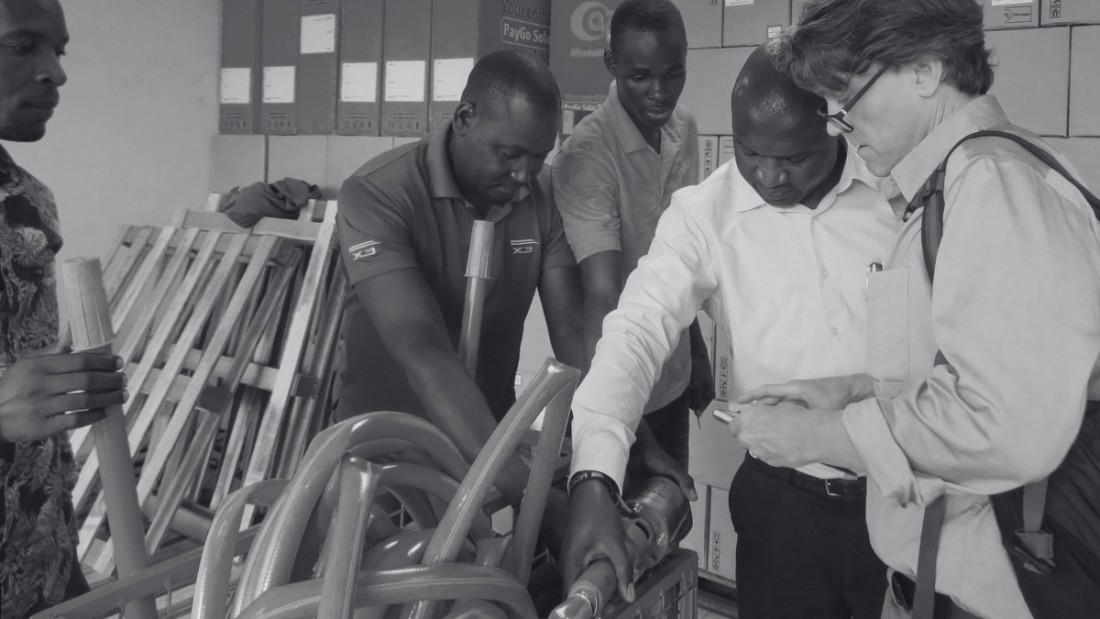
More than 800 million people worldwide lack access to electricity.
While many programs focus on providing energy for homes and schools, providing energy access to small businesses and farmers has unique potential for increasing economic growth in rural communities.
Columbia World Projects is thinking beyond the usual playbook by bringing together researchers across disciplines — including engineering and finance — with public and private partners to build a model data system in Uganda that can guide high-impact energy investments.
Mapping a Path to Rural Prosperity
Working side-by-side with the Government of Uganda and private partners in the energy and agricultural sectors, the Using Data to Catalyze Energy Investments team surveyed more than 2,000 square kilometers of land to identify which communities could benefit most from new energy investments. Combining the latest academic research with local insights, the team is now creating and testing an open web platform that can track and project energy demand for income-generating activities like farming.
By providing transparent information on energy availability and demand, the project aims to lower the risk for investing in the infrastructure and systems needed to provide power to new areas. Ultimately, this platform is designed to be replicable across sub-Saharan Africa and beyond, moving the world closer to the United Nations’ goal of ensuring reliable access to energy for all by 2030.
Project Leads
Philippe Benoit
Managing Director, Global Infrastructure Advisory Services 2050
Philippe Benoit is Managing Director, Energy, for Global Infrastructure Advisory Services 2050 and Senior Associate with the Center for Strategic and International Studies’ Energy and National Security Program. Benoit previously worked for 20 years at the World Bank, including on access programs across Latin America and the Caribbean and Sub-Saharan Africa.
Vijay Modi
Professor of Mechanical Engineering, Columbia University
Vijay Modi is a professor in the Department of Mechanical Engineering at Columbia University and a member of the Earth Institute faculty. His areas of expertise are energy resources/access, energy planning for access and renewable integration, demand estimation and role of novel payment systems in breaking barriers to upfront costs.
M. Suresh Sundaresan
Chase Manhattan Bank Foundation Professor of Financial Institutions, Columbia University
Suresh Sundaresan is the Chase Manhattan Bank Foundation Professor of Financial Institutions at Columbia University. He has published in the areas of Treasury auctions, bidding, default risk, habit formation, term structure of interest rates, asset pricing, investment theory, pension asset allocation, swaps, options, forwards, futures, fixed-income securities markets and risk management.
Project Team
- Edwin Adkins, Columbia University
