Ubumwe 2.0: Integrating Arts for Education and Psychosocial Support with Children and Youth Affected by Displacement in Uganda
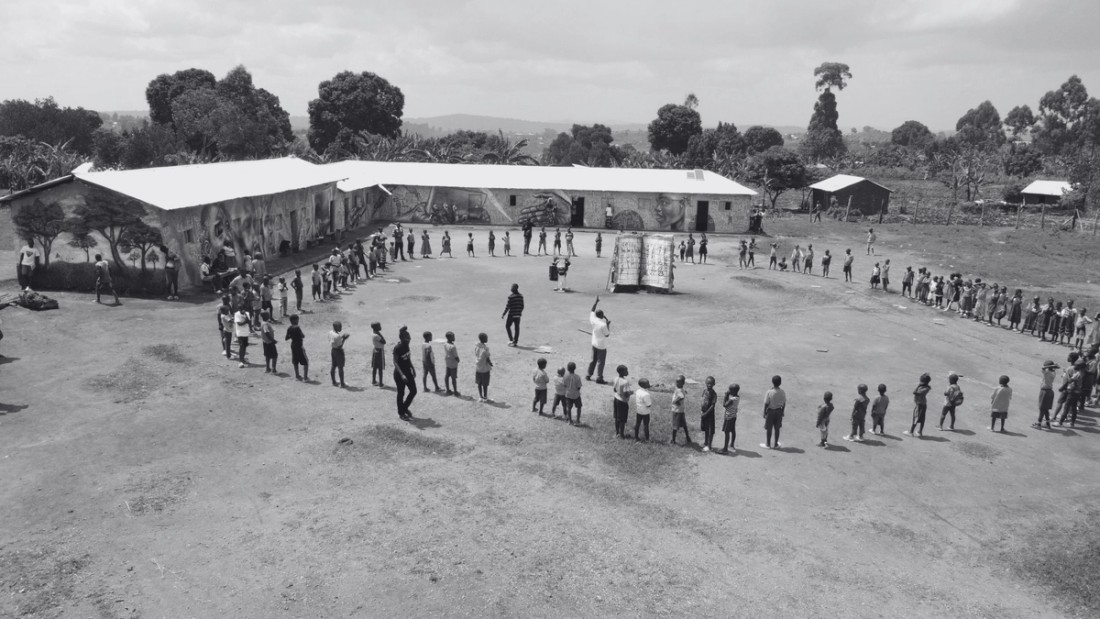
For children and young people affected by forced displacement, the loss of home is often compounded by the loss of community and the trauma of interrupted development.
The Ubumwe 2.0 project in Uganda partners Columbia faculty with local artists and educators, as well as local organizations, to integrate creative expression with mental health support, helping youth rebuild social connections and emotional resilience.
Supported by Columbia World Projects, this initiave is a collaboration between Columbia University's Teacher's College, Mailman School of Public Health, and Ugandan partners such as the AfriChild Centre, Hopelink Action Foundation Uganda, Arts Ignite and Artolution.
Healing Through Creative Expression
Ubumwe 2.0 tests a new model that integrates arts education — including music, dance, and visual arts — in schools for children and youth affected by displacement. The project aims to improve education outcomes and mental health well-being, socialization skills, coping strategies, resilience and connectedness to community among learners, and improved pedagogical content knowledge and resilience among teachers.
Mobilizing Collaborative Research for Youth Well-being
The project includes:
- Interdisciplinary Curriculum: The team develops specialized curricula that use artistic engagement as a vehicle for developing life skills, emotional regulation, and a sense of agency.
- Local Capacity Building: Researchers work directly with community leaders and local practitioners in Uganda, ensuring that the intervention is grounded in the local context and can be sustained by the community itself.
- Evidence-Based Impact: By tracking psychosocial outcomes and social integration, the initiative provides the rigorous data necessary to scale this arts-integrated model to other global regions facing displacement crises.
Project Leads
Sabrina Hermosilla
Assistant Professor, Mailman School of Public Health, Columbia University
Sabrina Hermosilla is an assistant professor in the Department of Population and Family Health at the Mailman School of Public Health of Columbia University. She has almost two decades of experience designing and conducting applied research studies.
Mary Mendenhall
Associate Professor, Teachers College, Columbia University
Mary Mendenhall, Ed.D., is an associate professor in the International and Comparative Education Program at Teachers College, Columbia University. Her research is situated at the intersection of the fields of education in emergencies, refugee and forced migration studies and teacher education.
Project Team
- Max Frieder, Artolution
- Lindsay Roberts Greene, Arts Ignite
- Kemigisha Richardson, Teachers College
- Ochaka Richard Okot, HAF Uganda
- Clare Bangirana, Makarere University
- Yana Mayevskaya, Columbia University
- Issa Rooney, Teachers College
- Alexandra Harakas, Teachers College
- Caitlyn Krueger, Teachers College
- Moisa Saidu, Teachers College
