Popular Transport and Inclusive Cities: Child and women friendly mobility and access in Ahmednagar and Mumbai
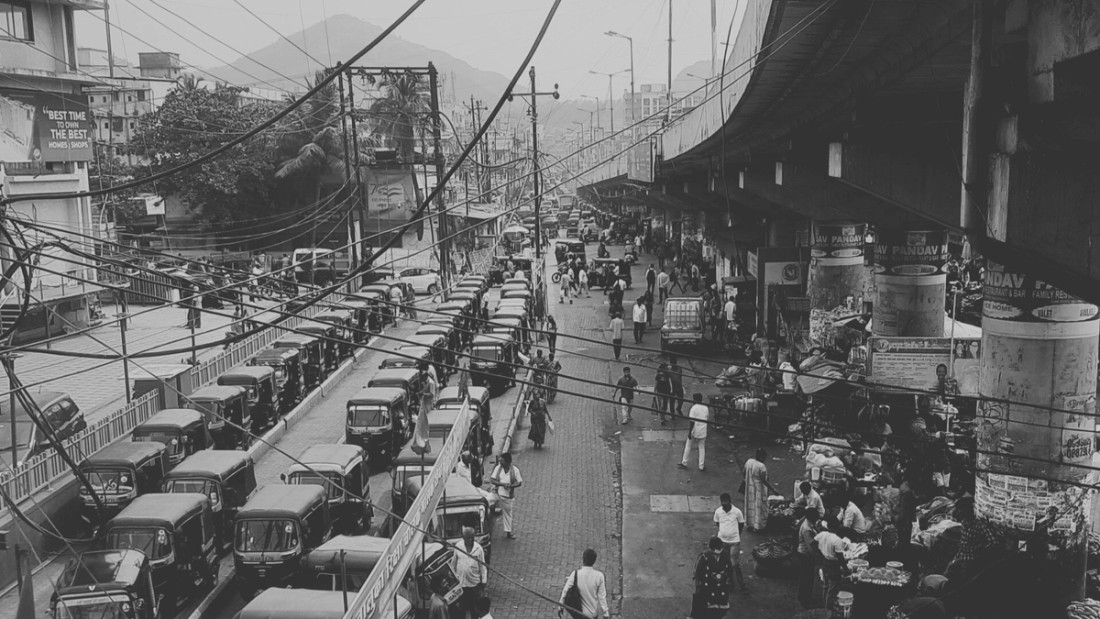
In rapidly expanding urban centers such as Mumbai and Ahmednagar, India, relocated and peripheral communities often find themselves physically isolated from the services they need.
Housing resettlement schemes provide shelter, but frequently overlook the transport infrastructure necessary for women and children to access health care, education, and employment safely.
The Popular Transport and Inclusive Cities project, supported by Columbia World Projects and Columbia Global Center Mumbai, aims to bridge this "mobility gap" by integrating informal transport into the formal urban fabric.
Key components of the initiative include:
- Integrated Mobility Hubs: Developing community hubs that combine childcare services and information access with dedicated rickshaw connectivity.
- Participatory Mapping: Using digital tools and women's collectives to map existing gaps in transit and identify high-risk zones.
- Pilot Interventions: Testing new rickshaw routes, implementing driver sensitivity training, and infrastructure improvements designed specifically for women and children.
- Collaborative Design: Engaging local transport operators, civic stakeholders, and Mahila Milan (a network of women’s collectives) to co-create policy solutions.
By centering the voices of more than 10,000 direct beneficiaries, the initiative aims to:
- Influence state and national urban mobility planning to recognize informal transport.
- Create frameworks for inter-city learning that can be applied to both megacities like Mumbai and smaller, growing urban centers.
- Translate real-world findings into policy briefs and public exhibitions to drive systemic change.
This initiative is a collaboration between Columbia University faculty and researchers at the Climate School, Graduate School of Architecture Planning and Preservation, and the Department of Political Science, along with India-based partners from SPARC, urbz and Urban Catalyst.
Project Leads
Jacqueline Klopp
Director, Center for Sustainable Urban Development, Columbia University
Jacqueline Klopp is the Director of the Center for Sustainable Urban Development at Columbia University’s Climate School. She is a social scientist who explores key policy and governance questions at the intersection of sustainable transport, land use, air pollution and climate in cities with a focus on accountability, technology, power and equity.
Nikhar Gaikwad
Assistant Professor, Department of Political Science, Columbia University
Nikhar Gaikwad is an assistant professor in the Department of Political Science and a member of the Committee on Global Thought at Columbia University. He specializes in international and comparative political economy, with a focus on the politics of economic policymaking and identity. Substantively, he works on trade, migration, and climate change policymaking.
Geeta Mehta
Adjunct Professor, Architecture and Urban Design, Columbia University
Dr. Geeta Mehta is the founder of Social Capital Initiatives (formerly Asia Initiatives), a non-profit organization that works with underserved communities to help improve the environment, livelihoods, education and health care. Geeta is the innovator of Social Capital Credits, a virtual community currency for social good that has won the World Changing Idea award from the Fast Company, and also prizes from MIT SOLVE General Motors, Vodafone, Jacobs Foundation, and others.
Project Team
- Anreerudha Paul, KRVIA; SPARC
- Alex Mohan Kandathil, SPARC
- Maria Lobo, SPARC
- Kareena Kochery, urbz
- Samidha Patil, urbz
- Sonal Shah, The Urban Catalysts
- Puja Pednekar, Columbia Global Center Mumbai
- Nihar Johari, SPARC
