Combating Household Air Pollution with Clean Energy
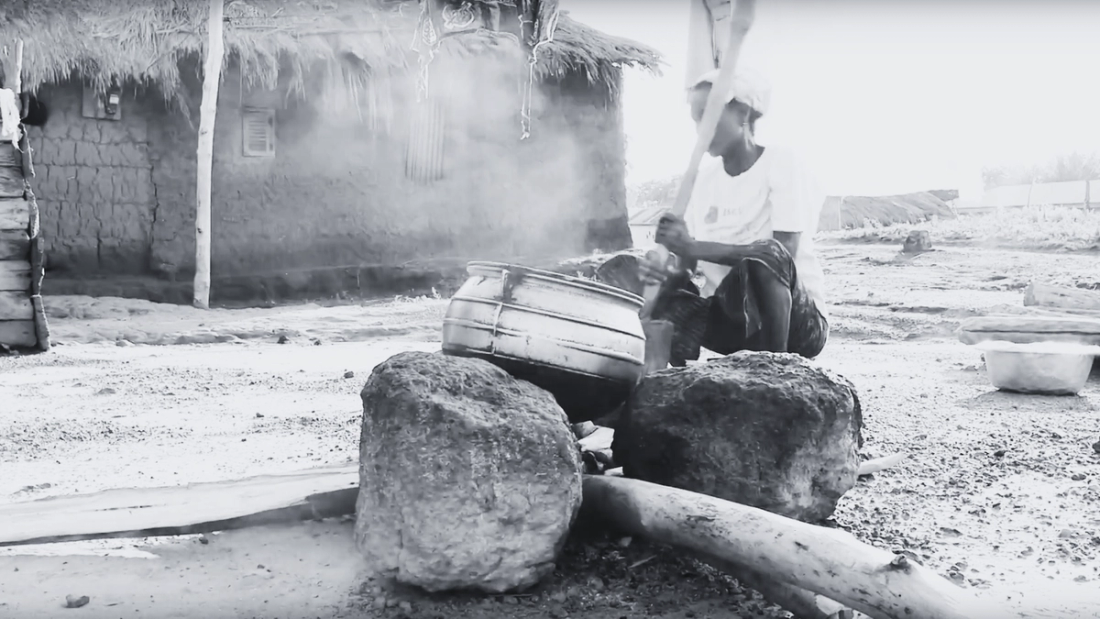
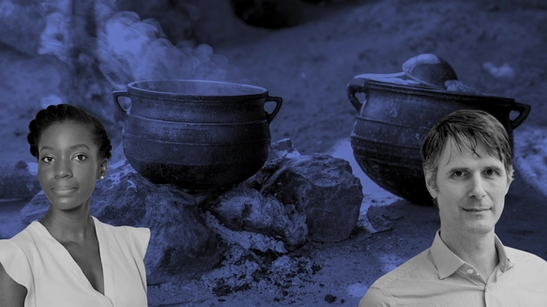
For the nearly three billion people who cook with wood and charcoal globally, household air pollution is a leading cause of premature death. While clean cooking technologies exist, cost, access, and other barriers prevent their adoption in many rural and low-income communities.
In Ghana, where more than 70 percent of households use wood or charcoal to cook, Columbia World Projects is addressing this crisis by bringing together interdisciplinary researchers with change-makers to co-create a mobile platform designed to make clean energy truly accessible.
Reshaping What Is Possible Through Collaboration
Solving complex challenges requires collaboration across disciplines and sectors. This project brings together researchers and practitioners from Columbia’s Mailman School of Public Health, Lamont-Doherty, the University of California, Berkeley, the University of California, Santa Barbara, and Kintampo Health Research Centre in Ghana with deep expertise in public health, environmental science, and economics, the Government of Ghana, private sector partners, and the Clean Cooking Alliance to develop a sustainable solution to the household air pollution crisis in Ghana.
The team first conducted robust assessments to gain a clear understanding of local energy needs and the factors driving household decisions in Ghana. Findings are now being used to inform the development and testing of a mobile platform designed to minimize barriers to accessing liquefied petroleum gas for clean cookstoves. By aligning economic incentives with public health goals and ensuring that solutions are grounded in local realities, this scalable system aims to turn the potential for clean energy use into a daily reality.
Ultimately, by documenting and disseminating the impacts of the mobile platform, the project aims to provide a blueprint that can be applied throughout Ghana and the rest of Africa.
Project Leads
Kwaku Poku Asante
Kintampo Health Research Centre
Dr. Kwaku Poku Asante, BSc. MBChB, MPH, PhD, is a medical doctor and a clinical epidemiologist. He is the Director of Kintampo Health Research Centre under the Ghana Health Service’s Research and Development Division.
Darby Jack
Columbia University
Darby Jack, PhD, is a professor at Columbia University's Mailman School of Public Health. He studies environmental health risks in developing countries, the health impacts of climate change, and the role of the urban environment in shaping health.
Kelsey Jack
Columbia University
Kelsey Jack is an Associate Professor in the Business and Public Policy group at UC Berkeley's Haas School of Business. Her research lies at the intersection of environmental and development economics, with a focus on how individuals, households, and communities decide to use natural resources and provide public goods.
Project Team
- Sulemana Abubakari, Head of Environmental Health Research, Kintampo Health Research Centre
- Alexander Appiah, Project Manager, Kintampo Health Research Centre
- Steven Chillrud, Lamont Research Professor, Columbia University
- Misbath Daouda, Assistant Professor, University of California, Berkeley (and former PhD Student, Mailman School of Public Health, Columbia University)
- Annelise Gill-Wiehl, Post-Doctoral Researcher, Mailman School of Public Health, Columbia University
- Erin Harned, Project Manager, Mailman School of Public Health, Columbia University
- Abishek Kar, Former Post-Doctoral Researcher, Mailman School of Public Health, Columbia University
- Heather Lahr, Project Manager, Environmental Markets Lab (emLab), University of California - Santa Barbara
- Flavio Malagutti, PhD Student, Bren School of Environmental Science & Management, University of California - Santa Barbara
- Georgette Owusu-Amankwah, Former Post-Doctoral Researcher, Mailman School of Public Health, Columbia University
- Lewis White, Data Analyst, Mailman School of Public Health, Columbia University