SIPA Capstone Team Visits Columbia Global Center Rio to Advance Research on Public-Interest AI in Brazil
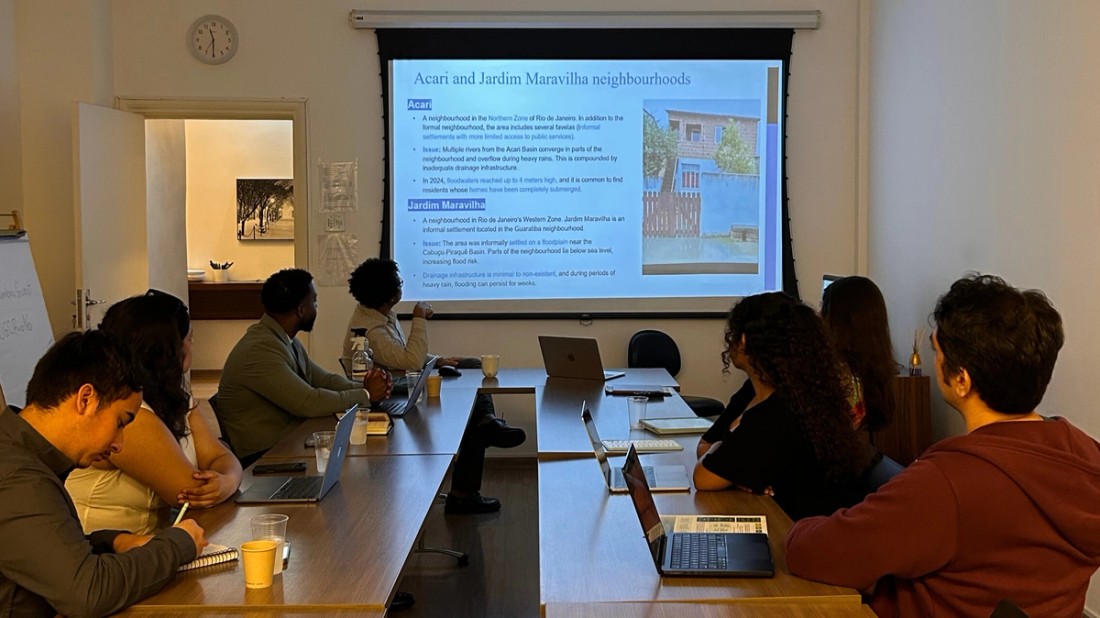
In March, a team of graduate students from Columbia University’s School of International and Public Affairs (SIPA) visited Columbia Global Center Rio de Janeiro as part of their capstone project developed in partnership with Fundação BRAVA.
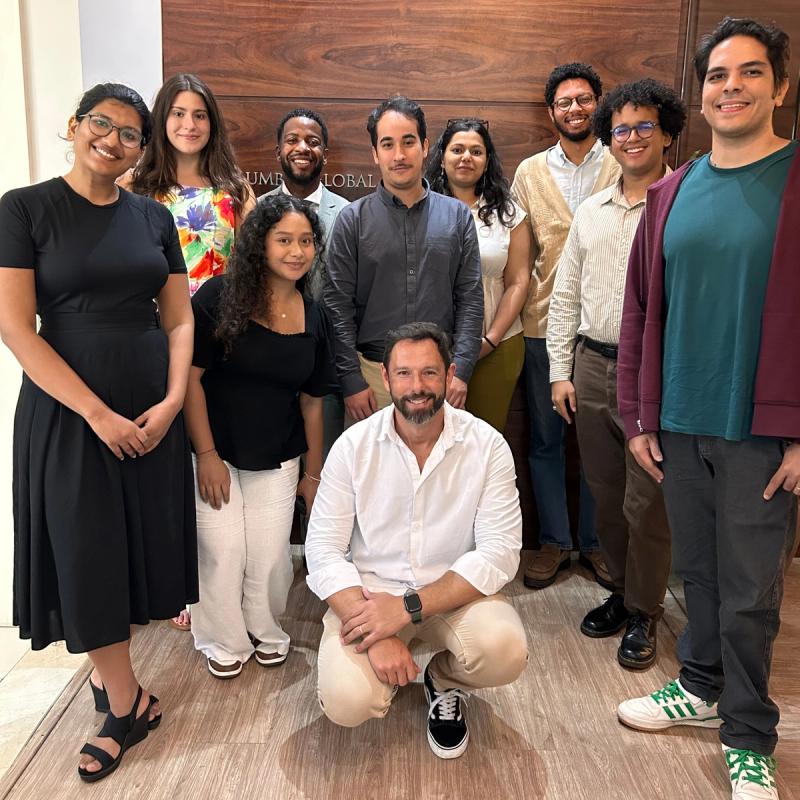
The project focuses on identifying high-leverage strategies to advance adoption of artificial intelligence in Brazil’s public sector. The students — Jamal Washington, Anshima Varma, Sanjana Aravamudhan, Jonathan Echavarria, Bojana Rose Starcevic, and Mardiantika Watubun — are examining how philanthropic actors such as Fundação BRAVA can help strengthen the institutional foundations required for responsible and effective AI adoption in Brazil.
During their time in Rio, the SIPA students engaged with researchers, public officials, philanthropic actors, and civil society organizations to better understand how AI is currently being developed and implemented across Brazil. The visit to the Rio Global Center provided an opportunity to complement their desk research on campus with on-the-ground perspectives from Brazil. It also allowed them to deepen their analysis of institutional barriers and opportunities for AI governance.
SIPA student Jamal Washington emphasized how the visit helped contextualize the research:
“Brazil sits at a fascinating and critical inflection point in AI governance. Individual public servants are becoming increasingly eager to innovate, but institutional systems around them lag significantly behind. What our research is revealing is that the primary barrier to responsible AI adoption in Brazil isn't technological; it's institutional. Fragmented governance, limited coordination across federal agencies, data interoperability gaps, and the near-absence of accountability mechanisms for the communities most affected by public sector AI are the most glaring challenges.”
The students’ project, Public-Interest AI in Brazil, seeks to identify intervention points that can enable scalable and durable AI use within the public sector while strengthening governance, accountability, and public value.
Their research highlights that while Brazil has demonstrated strong policy ambition — including a national AI strategy and significant public investment — system-wide impact remains limited due to institutional constraints, such as fragmented governance, weak coordination across federal agencies, siloed data systems, and limited oversight mechanisms.
BRAVA Foundation CEO Leticia Piccolotto said her group’s partnership with SIPA was leading students to focus on key areas of intervention: “Students are helping explore where strategic partnerships can accelerate responsible and sustainable AI adoption in Brazil’s public sector — from strengthening institutional capacity for AI governance to advancing data infrastructure and empowering civil society oversight.”
Insights gathered during the trip will feed into the team’s final capstone recommendations, aimed at helping philanthropic and public-sector leaders strengthen the governance frameworks needed for AI to deliver meaningful public value.
Learn more about grad student capstone opportunities at Columbia Global.
