Overcoming Misconceptions: Columbia Committee on Forced Migration Marks World Refugee Day
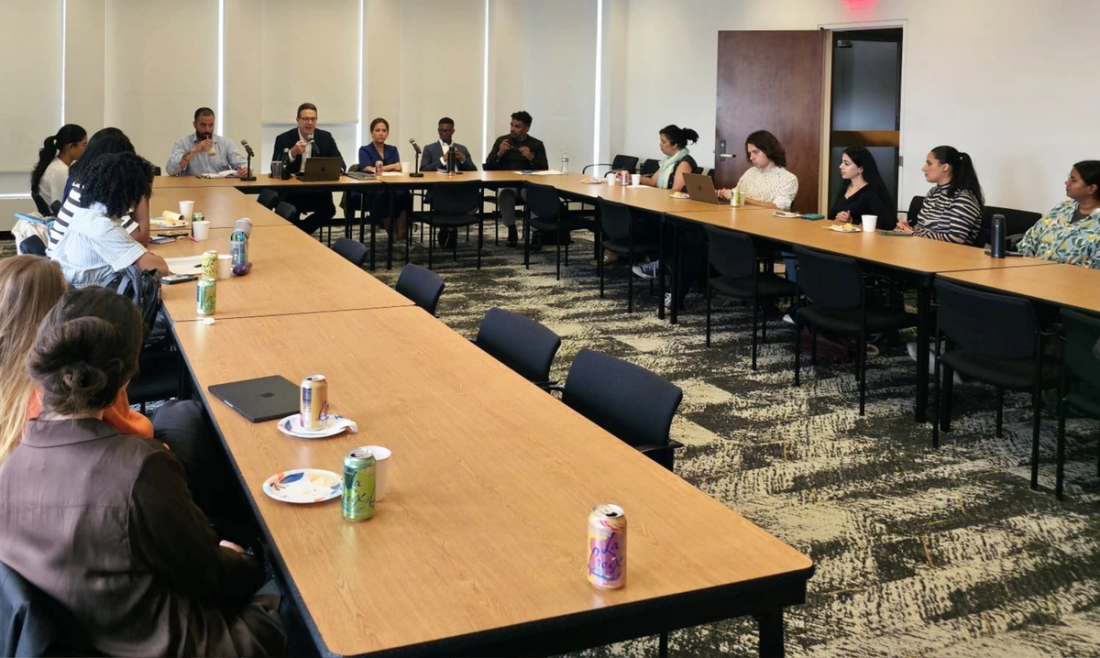
What challenges and misconceptions hold refugees back, and how can we overcome them?
As part of its ongoing commitment to elevate discourse on displacement — and to mark World Refugee Day — Columbia Global hosted an interactive discussion with both experts and refugees, bringing personal perspective to the challenges faced by those forced to flee their homes.
Hosted by Columbia Global’s Committee on Forced Migration, the event addressed persistent misconceptions surrounding refugees and displaced communities, the political and financial challenges faced by support systems, and the missed value that refugees — entrepreneurs, craftspeople, and experts — bring to society and economies.
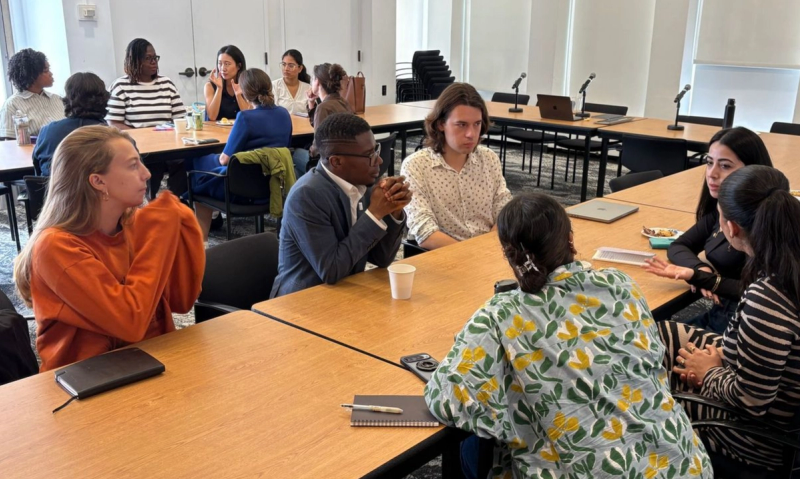
Participants also explored how to move beyond common narratives and toward more effective policy and solidarity, including interactive small-group discussion between experts and the audience — both in person and online.
Facing the World Alone
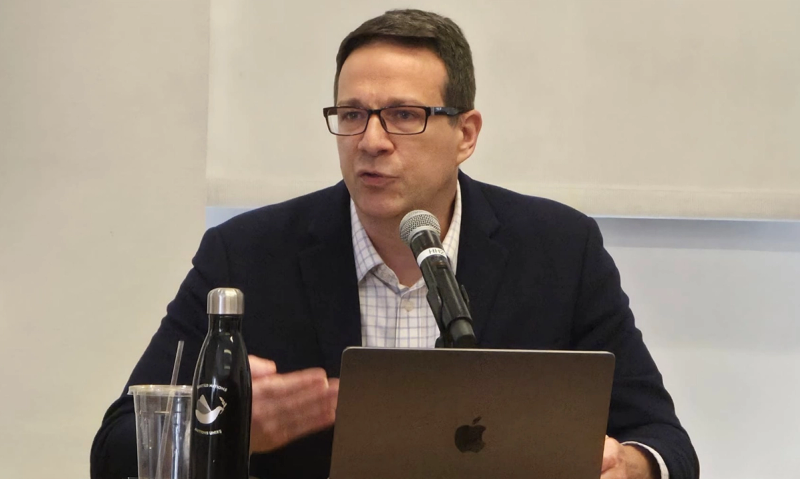
Professor Daniel Naujoks, who is part of Columbia Global’s Displacement in a Changing World event series, opened the discussion by framing it around the 75th anniversary of the Refugee Convention that promised no person forced to flee their home would face the world alone.
Naujoks serves as coordinator of the Committee on Forced Migration and faculty director for the United Nations Partnership Initiative at Columbia’s School of International and Public Affairs.
He highlighted common reductionist perspectives that all refugees cross seas in small life-rafts, are agency-less victims, economic burdens, or are superhumans like Malian refugee Mamoudou Gassama, who was offered French citizenship after scaling a five-story building to save a 4-year-old child. He said these reductions and framings are wrong, incomplete, and in most cases misleading. But also, they put limitations — or as philosopher Amartya Sen called the ‘miniaturization’ — on people who are inherently diverse.
Borders, Burdens, and Basic Needs
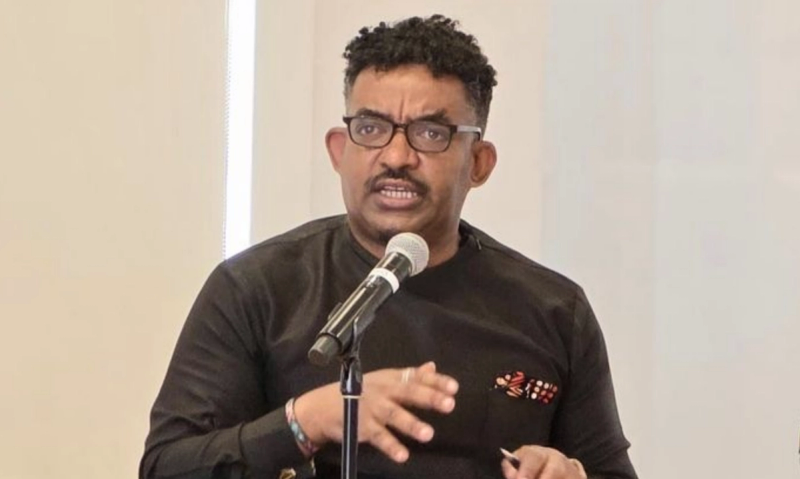
Dr. Allehone Abebe, a Senior Policy Advisor at the UN Refugee Agency, UNHCR, grounded the discussion in the fundamental human need to help those suffering and seeking refuge. Abebe stressed that while governments have a right and responsibility to govern borders, reducing legal pathways for those in need demands critical policy changes. He also pushed back against the narrative that refugees are a burden on wealthy nations, pointing out that the vast majority of the world’s 118 million refugees are hosted by neighboring countries in the Global South, often in contexts that face their own significant challenges.
Personal Perspectives of Pain and Promise
Wael Habbal, a recipient of the Scholarship for Displaced Students and assistant at the Committee on Forced Migration, shared his personal experiences as a refugee.
“I'm here today as someone who has lived this reality. Someone who crossed rivers, crossed mountains, crossed borders. Someone who has been told to be grateful for an overcrowded camp, for a basket of food. Someone who has been told to 'wait for my passport until I figure out my life.'"
He challenged the “toxic paradox” in which refugees are simultaneously viewed as helpless victims and dangerous lawbreakers, arguing that the “crime” often lies in the system, not the individual.
“If the system requires a human being to face death just to access a human right, the criminality does not belong to the person; it belongs to the system,” Habbal said. He pointed to the response to Ukrainian refugees as evidence that political will exists, safe routes can be established quickly.
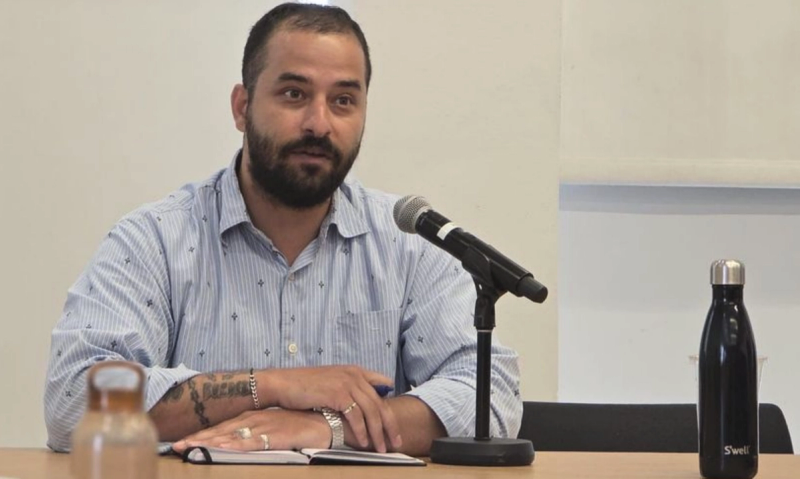
George W. Tarr, a Refugee Congress Honorary Delegate, UNHCR Youth Ambassador, and refugee advocate, echoed the need for refugees to have a seat at the table.
A refugee from Liberia, Tarr said: “I often hear that we refugees just get up one day and decide to leave our home and travel anywhere that we wanted to travel. The truth is that we don't have control over certain things, like war. Remember that nobody chooses a life filled with trauma. Nobody chooses to experience seeing a 7-year-old child get killed.”
He also pushed back on the portrayal of refugees as security threats, noting they are the ones living in fear. He argued they escaped violence and often are afraid to avail themselves of resources and opportunities because they fear being exploited or, if they don’t have a secure immigration status, being deported.
He also explained that refugees often undergo more rigorous screening than the average citizen. Tarr emphasized the importance of community leadership in the integration process, noting that while integration is often portrayed as a struggle for the individual, it is a process that requires better connection to resources and partnerships between organizations.
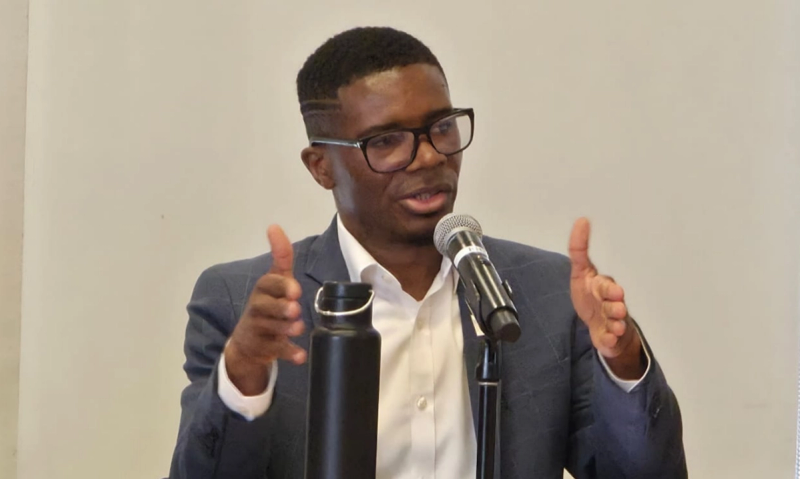
Where We Go From Here
Professor Mashura Akilova of the Columbia School of Social Work rounded out the expert remarks by analyzing the “misconception of helplessness.” She highlighted that while humanitarian responses often focus on immediate basic needs, this approach can inadvertently reinforce the image of refugees as passive victims rather than resilient individuals with their own ambitions and capabilities. She challenged the audience to look deeper at the structural causes of displacement, asking who is responsible for the conditions that force people to flee in the first place — pointing to the roles of the Global North in climate change, economic policy, and international conflict.
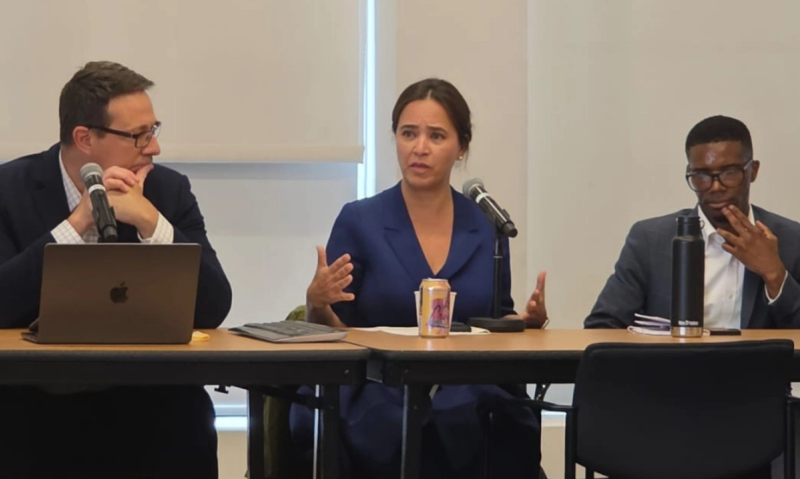
After the initial session with expert highlights, all participants broke into small groups to discuss these themes, moving the conversation from theory to shared experience. As Naujoks noted in his closing remarks, the ultimate goal is to move beyond “miniaturizing” refugees into single labels. By recognizing the humanity, complexity, and systemic realities behind the headlines, the event called for a shift toward deeper empathy and structural change.
Check out all past and upcoming events of the Displacement in a Changing World: Global Dialogue Across Campus and Continents. See here for more information on the Columbia Committee on Forced Migration.
