Columbia Global Center Rio's AI-Powered Alerts Transform Climate Disaster Response
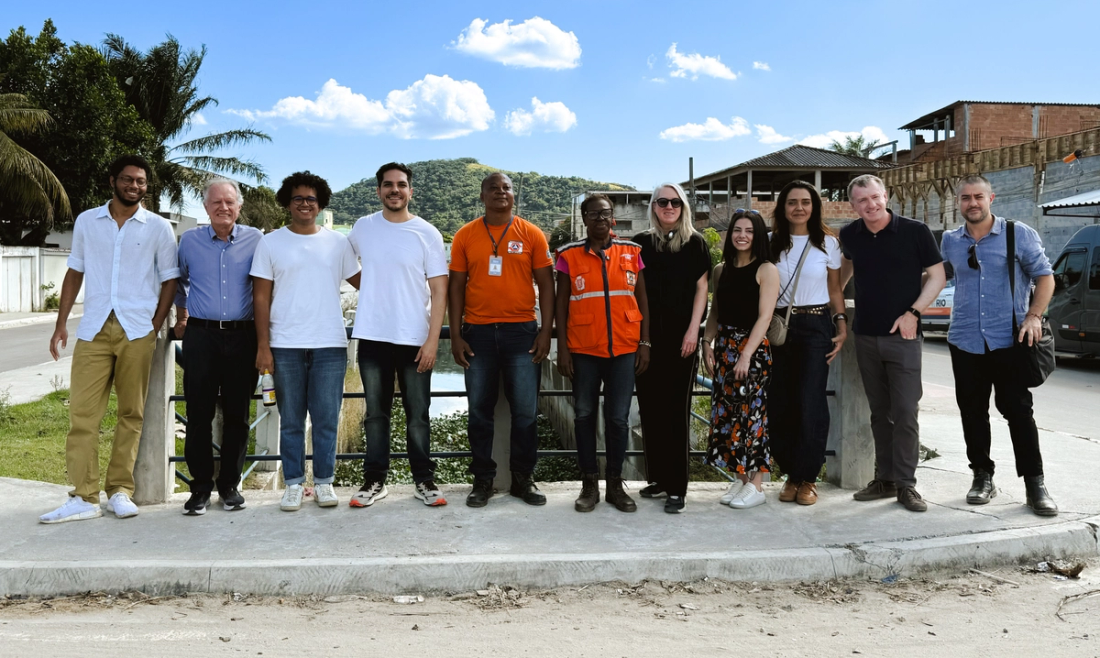
A WhatsApp chatbot is improving the government’s emergency response to floods and landslides in low-income communities.
After floodwaters swept through her home, 64-year-old Maria das Neves Cunha lost her furniture, documents, kitchen supplies, rugs — “Everything,” she says.
She lives in Jardim Maravilha, a community of 23,000 residents on the far western edge of Rio de Janeiro, Brazil. When it rains, her neighbor, Célia Regina, suddenly has to leave home and stay with friends. “The water here gives no warning,” she says. “It creeps in, and then there’s nowhere for it to drain. I spend three, five days at other people’s houses, and when I return, my house is full of bugs, frogs, tree frogs, that rotten sewage water…During floods, we suffer terribly. It’s heartbreaking.”
Both women were caught off guard by the recent flood and had no time to place their furniture on wooden pallets — the most common way residents try to prevent damage. Global warming is producing heavier rainfall, especially in tropical regions such as Rio de Janeiro. In November 2025, during the last major storm to hit the city, Rio recorded 105 weather-related emergencies, making communication in the neighborhood precarious.
Now, Rio de Janeiro can see the danger coming and reach the people in its path before the water does, thanks to a project led by Columbia Global Center Rio in collaboration with two city agencies — IPLAN (Rio’s technology and IT agency) and COR (the Rio Operations Center) — and supported by The Rockefeller Foundation.
